At Higher Failsworth Primary School Reading and Writing are crucial parts of our curriculum. It is our intention to ensure that all pupils regardless of background, gender, ability or additional need will access the key skills taught in English enabling them to approach materials in all curriculum areas with confidence. We intend to provide a strong foundation for their learning throughout their school career enabling learners to flourish and establish the skills they need to become confident and proficient readers and writers. We endeavour to fully equip our pupils with all the skills necessary so they are able to grow their knowledge and passion for the world by utilising their literacy skills making them a lifelong learner.
Aims
We aim to:
- To extend and develop the knowledge of language children bring from home by providing a wide range of linguistic experiences.
- To ensure that all pupils can read easily, fluently and with good understanding and develop the habit of reading widely and often, both for pleasure and information
- To ensure that all pupils acquire a wide vocabulary, an understanding of grammar and knowledge of linguistic conventions for reading, writing and spoken language.
- To ensure that all pupils appreciate our rich and varied literary heritage.
- To ensure that all pupils write clearly, accurately and coherently, adapting their language and style for a range of contexts, purposes and audiences.
- To develop every child’s understanding of the spoken word and their capacity to express themselves effectively in a variety of speaking and listening activities, matching style and response to audience and purpose.
- To ensure that all pupils use discussion in order to learn; they should be able to elaborate and explain clearly their understanding and ideas.
- To meet the requirements of the National Curriculum and the EYFS Development Matters document.
- To appropriately integrate the use of ICT within English delivery in order to enhance teaching and learning.
- To monitor and evaluate the quality of teaching and regularly assess the standards of teaching and learning across the school.
- To create an atmosphere of enjoyment and pleasure in which all children feel confident to express themselves in both spoken and written language.
- To provide high quality English experiences outside designated English lessons through a cross-curricular topic approach.
At Higher Failsworth the literacy curriculum is made up of several components; phonics, reading and writing. Each aspect is taught discreetly as well as in a cross curricular approach. Working in this manner ensures that the key skills become embedded in our curriculum and learning.
Phonics

At Higher Failsworth we use a structured systematic approach to teaching Phonics. We follow a programme of study produced by Read Write Inc. Phonics sessions begin in our Nursery and Reception Classes and run until the children are in year2 and beyond, if required. Children’s progress and learning is closely assessed and monitored to ensure they are accessing the learning at a level that is appropriate to them.
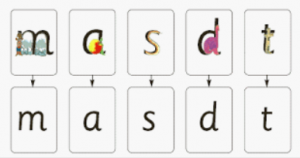
At the beginning of the programme children are encouraged to listen to environmental sounds, play games with sounds as well as learning to segment and blend words orally (Understanding FRED the phonics frog and have a go at talking like FRED too!) The children are then taught to recognise picture cards linking to corresponding sounds.
Once this learning is established children are then taught to recognise lowercase letters by grapheme (letter) and phoneme (sound). After four weeks in reception, when the children have settled in we assess their segmenting and blending abilities and place the children into focused phonics groups. At this point phonics work will be tailored to each of the group’s needs. For those assessed below the level expected for this stage in their education they will continue to work on and develop these very early skills until the children are confident to use all representations of the single sounds in the alphabet. For those assessed at the expected level for this stage in their education they will be supported to build and write small cvc words using the single sounds they have previously been taught. Learning will be reassessed on a 6-8week basis to help measure progress and enable teachers to continuously provide tailored learning for all children.
Children in the foundation stage at HFPS will participate in a 30-minute Phonics session daily.
Year 1 and 2 builds on the learning and experiences of phonics previously taught in EYFS. At the end of each academic year the phonics exit data will be shared with the class teachers so they have a clear picture of their new class and this information will be used to inform the groupings at the start of the school year. The same 6-8weeks cycle of assessment, grouping, planning, learning and reviewing or reassessing is used.
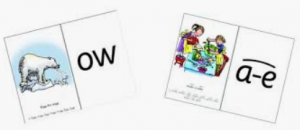
Within these year groups the children will be taught about digraphs and trigraphs, groups of 2 and 3 letters put together to make one sound. The children will be shown how to recognise these in real and nonsense words as well as being encouraged to read with speed, fluency and accuracy. In addition to this the children will be taught to read ‘Tricky Red Words’ also known as common exception words.
Children in the Key Stage at HFPS will participate in a Phonics/ Reading session daily. For children assessed as pink group and below will receive 1 hour daily focusing on sound knowledge, reading accuracy and speeds, reading storying and discussing stories linked to their reading level and completing writing activities that will embed their sound and reading knowledge.
Children in Key Stage 1 at HFPS who assess beyond pink group will receive a 1 hour phonics session on a Monday. This is our big read day when a new text is shared and discussed. On Tuesday-Friday the children will access daily sessions that are 35 minutes in length. These sessions continue to follow the schemes sounds lessons and allow for storybook practice times.
By the beginning of the Spring Term in year 2 it is expected that the children will have successfully completed the phonics programme.
For children who are not meeting the expected levels we follow a 1:1 phonics tutoring programme to help fill any knowledge gaps. Children in KS2 who are struggling with knowledge and understanding of phonics are able to access small group targeted sessions, 1:1 phonics tutoring as well as precision teaching interventions such as ‘Toe by Toe’ and other spelling interventions led by teaching assistants.
Reading at Higher Failsworth
Reading is a vital part of school life at Higher Failsworth and is embedded across the curriculum. Every classroom has a dedicated reading area stocked with a wide range of books to suit different interests and reading abilities. Children also regularly visit the school library to further support and enrich their learning.
Across the school, children listen to high-quality, modelled reading by adults in a wide range of lessons. Daily or frequent story times allow children to enjoy books, develop listening skills, and discover their own reading preferences. In English lessons, shared reading is used to explore texts in depth, with adults and children reading together. During these sessions, children identify key features of different text types and explore spelling, grammar, and punctuation to support their writing development.
As reading is fundamental to learning, children are provided with books to take home. The main reading scheme used at Higher Failsworth is Accelerated Reader, and children also have access to a wide range of online books through myON.

In addition, the school has a large selection of real books, which are carefully matched to each child’s ZPD (Zone of Proximal Development). This ensures that all children can choose books that are appropriately challenging, including texts by well-known authors, while continuing to build confidence and enjoyment in reading.
Children in Reception to Year 2 read daily as part of their phonics lessons with their phonics teacher. Reading books are closely matched to each child’s phonics assessment level and are fully phonically decodable. Books that are sent home match the child’s reading level and the reading theme of the week. We feel this focuses practice and helps children consolidate their in class learning. Texts are used over several days to develop fluency, confidence, and understanding. During these sessions, adults model reading, introduce new vocabulary, and support children in discussing the text and finding evidence to support their understanding.
From the Spring Term in Year 2, children who are working at age-related expectations take part in Guided Reading sessions. These are delivered as large group or whole-class sessions using carefully chosen texts that are appropriate for the children’s reading age. Teachers plan lessons that focus on developing vocabulary knowledge and strengthening comprehension skills.
In Years 2 to 4, guided reading sessions focus primarily on developing scan reading and retrieval skills. During these sessions, children are listened to read daily from the text they are currently studying, allowing teachers to monitor fluency, accuracy, and expression. Alongside this, pupils begin to explore key reading skills through the VIPERS approach (Vocabulary, Inference, Prediction, Explanation, Retrieval and Sequencing).
In Years 5 and 6, the emphasis of guided reading shifts towards developing higher-order reading skills, including inference and deduction. Children continue to read regularly within lessons, ensuring ongoing support with fluency and comprehension, while using VIPERS to deepen their understanding of texts.
In Year 6, pupils are also given regular opportunities to explore previous SATs papers and practise the reading skills and strategies needed to approach them confidently, effectively, and with resilience.
At Higher Failsworth, we aim to foster a lifelong love of reading while ensuring all children develop the skills they need to become confident, fluent, and thoughtful readers.
You can find out more about our Reading curriculum here.
Writing
At Higher Failsworth we aim to ensure that our children are as engaged as possible in their writing and so, as each new topic begins, we immerse the children with a ‘hook’, this could be through drama, shared experiences, outdoor learning just to name a few! We feel that this not only helps build the children’s enjoyment of writing, but also allows them to build vocabulary choices before they begin to write.
Within our Nursery setting we introduce the children to marks by using ‘Squiggle while you Wiggle’ writing programme. Squiggle uses neurological and physiological movements to create marks. In Reception, much of our writing is based around Drawing Club By Greg Bottrill. This allows the children to explore a story as a class and then individually create their own story adventures, starting with verbal storytelling then progressing to mark making. In addition to this we follow the writing rhythms from the Read, Write, Inc scheme to support letter formation. In the early stages of KS1 we allow the children to explore writing through the Read, Write, Inc phonics scheme to support their ability to form sentences which are structured accurately. We then introduce them to the writing cycle which is seen across the rest of the school.
We are focused on ensuring that the children’s writing is well structured and as a result we teach them to rehearse vocabulary and plan their writing from KS1. These skills are then reinforced and built upon in KS2 with the aim of children becoming more independent and confident writers by the time they reach Year 6.
Specific writing skills are taught as a whole class through shared and paired writing. Through ‘guided writing’ sessions the teacher may focus a small group of children on a specific skill and then allow time in the proceeding lessons for the children to apply this independently. In KS1 we encourage the children to use lots of picture plans to support their writing, then in KS2 the children are encouraged to use the ‘spider plan’ to plan their paragraphs.
In the later stages of KS1, children are introduced to simple editing and proofreading, making small alterations to improve their writing. This develops further in KS2, where pupils suggest improvements to their own and others’ writing and make changes that both correct and enhance their work.
Handwriting
We have recently overhauled our handwriting scheme to ensure it aligns with the new Literacy Framework and provides a clear, progressive structure from EYFS through to the end of Key Stage 2.
Handwriting begins in EYFS, where children follow the Read Write Inc. programme and are introduced to correct letter formation using pictorial mnemonics. This supports children in developing strong foundations through clear visual cues and consistent language.
As children move into Key Stage 1, they begin the school’s handwriting scheme. The focus is initially on the accurate formation of letters. Each week starts with a longer teaching session to introduce or revisit a specific handwriting skill. This is followed by short daily practice sessions, allowing children to revisit and embed these skills consistently.
In Year 2, children progress to learning pre-cursive letter forms, building directly on the accuracy and control developed in Year 1. This prepares them for fluent joined writing in later years.
As pupils move into Key Stage 2, the focus shifts to joining letters correctly, developing fluency, and increasing writing speed while maintaining legibility. By Upper Key Stage 2, children are encouraged to develop a confident, fluent handwriting style that remains clear, consistent and appropriate for a range of writing purposes.
This carefully structured approach ensures that handwriting skills are built progressively, giving children the confidence and control they need to write efficiently across the curriculum.
Spelling and Grammar (SPaG)
At our school, Spelling, Punctuation and Grammar (SPaG) is taught through our writing curriculum and is embedded within a range of purposeful writing genres. Rather than being taught in isolation, SPaG is carefully woven into each unit of work and directly supports pupils in producing a high-quality final piece of writing.
Leaders and teachers have identified the key punctuation and grammar objectives to be taught across the academic year. These skills are thoughtfully mapped out and revisited within meaningful writing contexts through focused key skills lessons. This approach ensures that pupils understand how and why grammatical features are used, rather than simply learning rules.
By teaching SPaG in context, pupils are more confident in applying these skills independently and with increasing accuracy in their own writing. This integrated approach supports deeper understanding, stronger writing outcomes and greater consistency across the curriculum.
You can find out more about our Writing curriculum here.